Exploring a Therapeutic Sensory Gym: Fun and Functional Equipment for a Successful Pediatric OT Session

Occupational therapy (OT) clinics use sensory gyms to support children’s development through play and movement. These spaces are filled with specialized equipment that target sensory processing, motor skills, and emotional regulation. Each piece of equipment is specially designed and used to support specific neuorological processes and developmental skills. For parents and caregivers, understanding the purpose and benefits of this equipment can provide insight into how their child with sensory challenges engages in a session and informs how similar benefits can be achieved at home. Keep reading to learn how the equipment found in your child's OT clinic supports your progress toward goals.

Platform Swing
The platform swing is a versatile piece of equipment that supports vestibular processing, postural control, balance, body awareness, and strength. The vestibular system relates to balance and spatial orientation. It informs the when and where of a body in space. On a platform swing, children can lie, sit, or stand on the swing as it moves gently or with more vigorous motion. Therapists will often add in a visual component to activities on the platform swing so to target deeper integration of sensory systems.

Frog Swing
The frog swing is a therapeutic, height-adjustable swing designed to provide proprioceptive and vestibular input to its user. It supports the child in a prone (stomach-lying) position, allowing them to bounce and move using their hands and feet. The frog swing's low position and supportive structure makes it ideal for those with gravitational insecurity, low-tone, and motor planning challenges. It provides active, controlled vertical stimulation and can be utilized as part of a variety of multisensory games and activities.
Trapeze
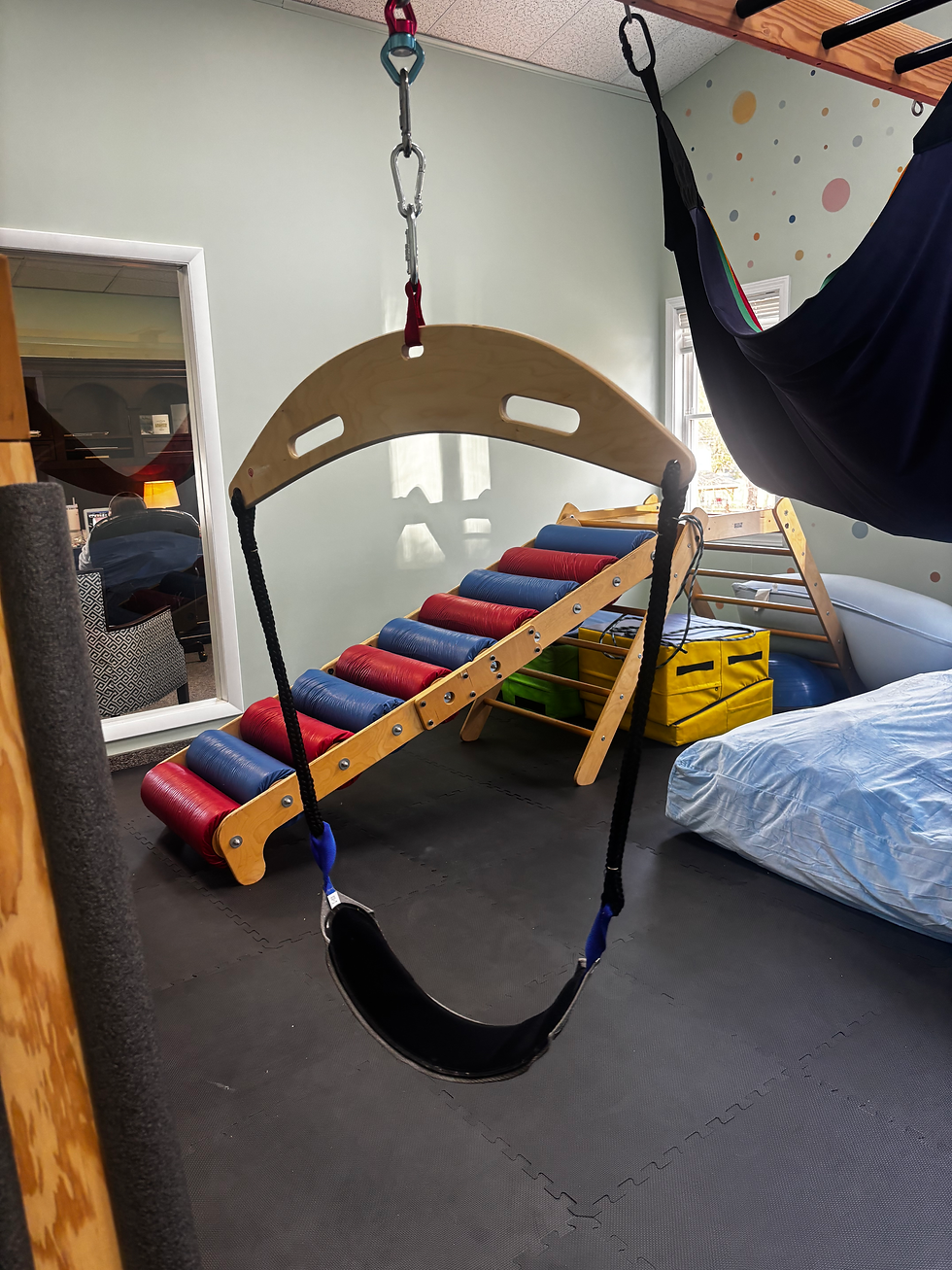
The trapeze offers dynamic movement opportunities that challenge the vestibular and proprioceptive systems, as well as a child's upper body and postural strength. Children can hang, swing, or spin, which promotes balance, muscle strength, and spatial awareness. Therapists will often use a trapeze swing in sessions to promote grip strength and upper-body stability while meeting sensory demands. Such foundational skills can be generalized into handwriting, scissor skills, buttoning, and feeding utensil use.
Hammock
The acrobat swing or hammock is a multilayered piece of equipment that provides calming vestibular input, deep proprioceptive pressure, and motor planning challenges. It utilizes a 4-layer, 4-way stretch and can be hung in a variety of fashions to target different goals. Depending on the orientation and setup, the hammock swing allows for horizontal swinging, vertical climbing, and creating a sensory-calming tent space.

Monkey Bars
Monkey bars encourage upper body strength, coordination, and provide prospective input, which is the sense of knowing where body parts are in space. As children reach, grip, and swing across the bars, they develop motor planning skills and muscle control needed for daily activities and age-related play. Monkey bars in a clinic setting can also build confidence and perseverance that can be replicated on the playground in their own community.

Astronaut Board
The astronaut board is a specialized rotating board used in the Astronaut Training protocol. This protocol aims to improve vestibular (balance/motion), visual, and auditory processing. It involves spinning children in various positions, paired with music, to improve sensory regulation, focus, motor coordination, and neurological responses. The board is a flat, sturdy board that allows for rhythmic and controlled rotations.
Crash Mats
Crash mats are soft, often foam-filled sensory tools designed to provide safe landing during high-energy play and a supportive, cushioned surface to engage in more sedentary activities. They can be used to foster proprioceptive feedback and deep pressure calming inputs. These durable mats help children with sensory processing challenges improve motor planning, body awareness, balance, and emotional regulation.

Why Sensory Gym Equipment Matters
Each piece of equipment in a sensory gym targets specific sensory systems and helps to establish the foundations of an effective and efficient nervous system, both of which are crucial for a child’s development. For children with sensory processing challenges, these tools provide structured ways to explore movement and sensory input safely.
Skilled OT sessions in a sensory gym can be an important part of a child's therapeutic treatment plan. With the right equipment, therapist/child match, and treatment plan, meaningful gains can be made in:
Motor skills: Better coordination, strength, and control
Sensory regulation: Reduced anxiety and improved focus
Social skills: Opportunities for interaction and communication
Confidence: Mastery of new physical challenges boosts self-esteem
Parents can support therapy goals by encouraging similar activities at home, such as swinging, jumping, or climbing in safe environments. Ask your OT for specific recommendations!
Contact us to learn about our sensory gym and how we can support your child's goals in our gym!


Comments